Giving AI coaching a face
Coaching isn't what you say to someone. It's what happens because someone is there. Until now AI has been able to ask coaching questions through a chat box. It still hasn't been able to be present in the room. This piece is about what we built and why we built it that way: an emotionally expressive avatar called Victoria, full-screen on a phone. Coaching is sustained attention. A face is the most direct way to give it.
David Nicol
Giving AI coaching a face
Coaching isn't what you say to someone. It's what happens because someone is there.
Every major coaching body (the ICF, the Association for Coaching, the EMCC) puts presence at the top of its core competencies. Above listening, above powerful inquiry. The rest of the work follows from it.
AI has been able to ask coaching questions through a chat box. It still hasn't been able to be present in the room.
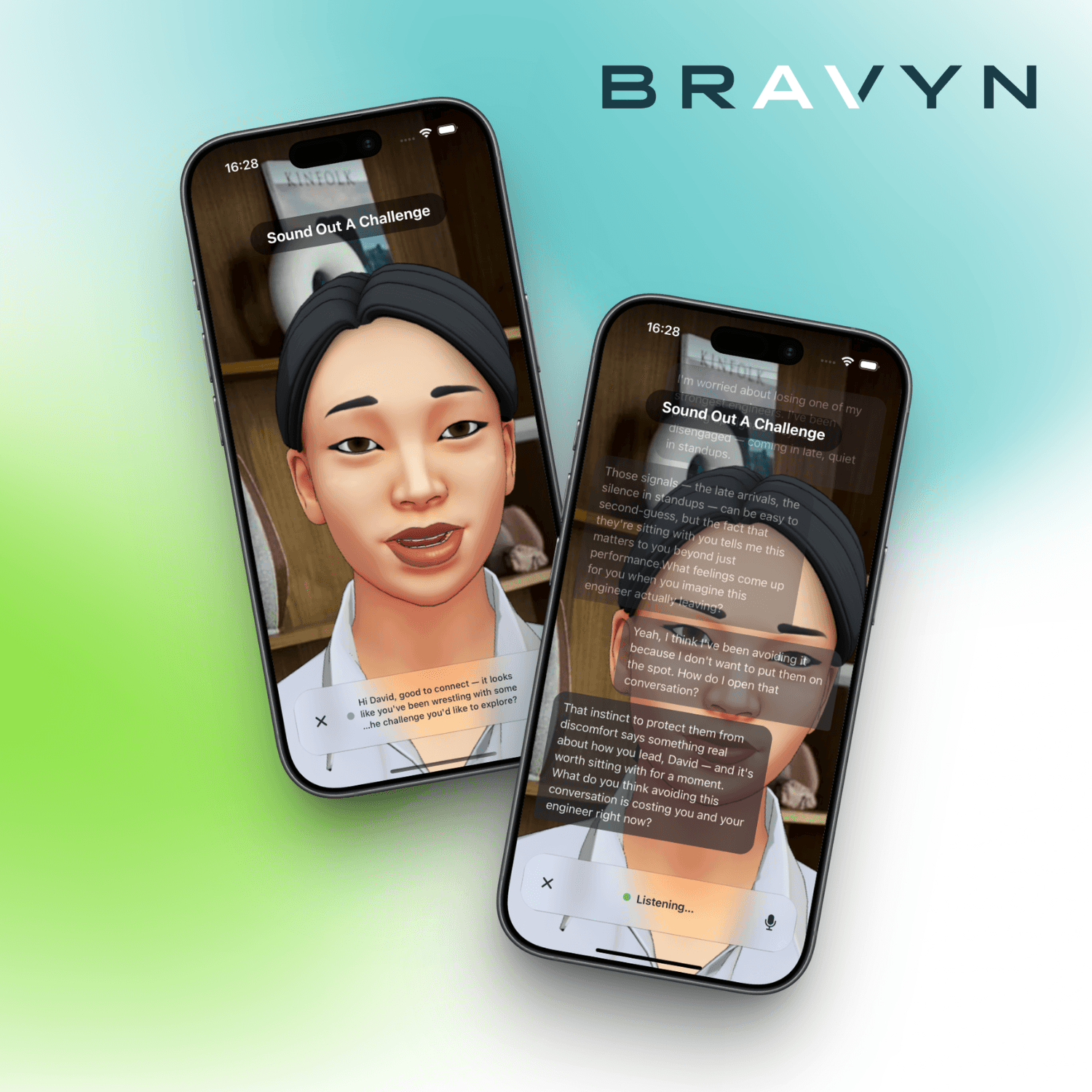
This piece is about what we built and why we built it that way: an emotionally expressive avatar called Victoria, full-screen on a phone, who listens, reacts, asks questions, and holds silence. The product is live, and we'll be showing it at CIPD Festival of Work, ExCeL London, on 10–11 June. Come and see for yourself.
Coaching is sustained attention. A face is the most direct way to give it.
What we built
Imagine you have a tough 1-2-1 coming up. Maybe with someone whose performance has slipped, or a peer you've been avoiding pushing back on. You open the app. The screen fills with Victoria's face. She listens. You speak; she nods, follows the line of what you're saying, asks something that turns the angle a little. She pauses when you pause. When you reach the thing you've been avoiding, she lets the silence sit.
That's a normal session. Five to fifteen minutes, no scheduling, before the meeting that matters.
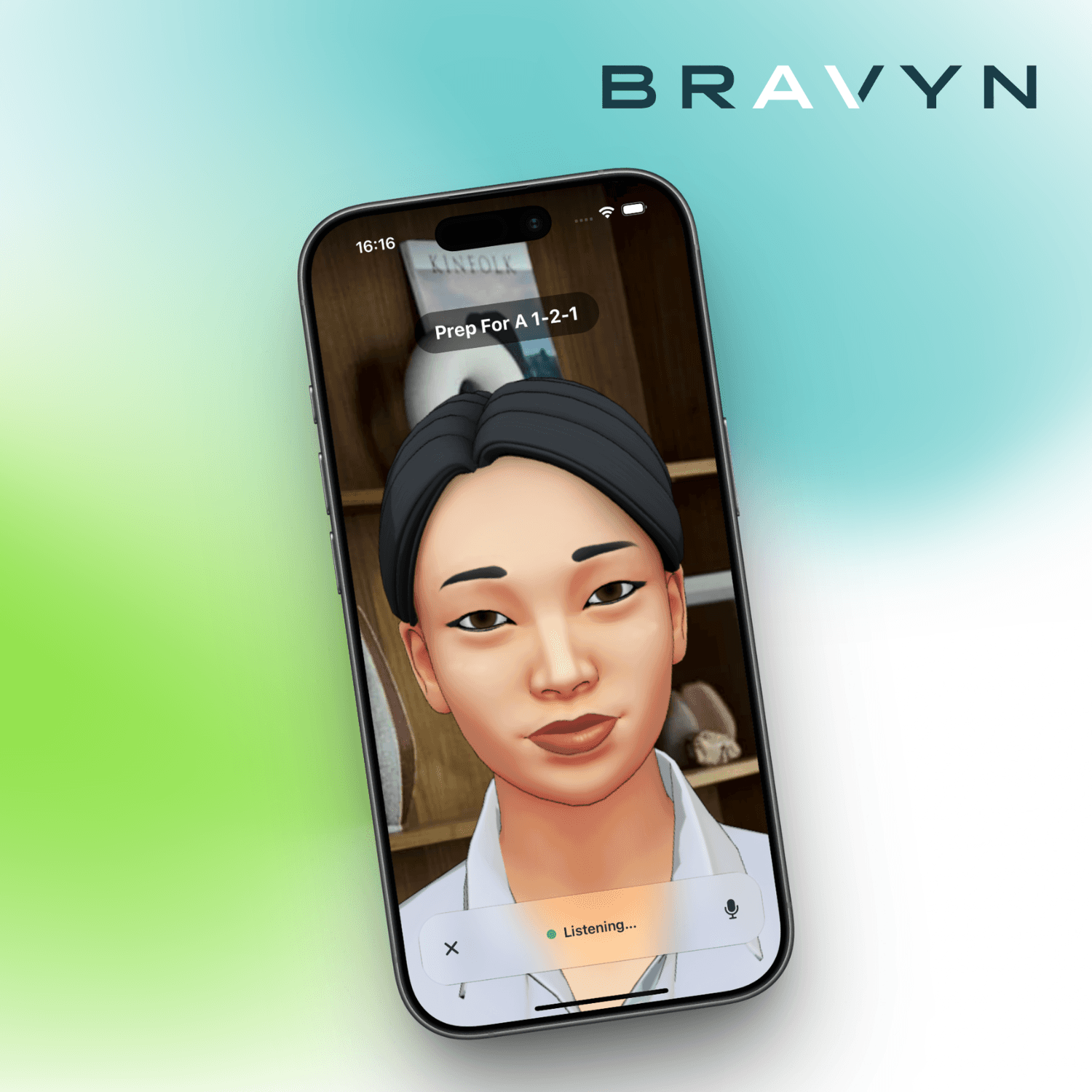
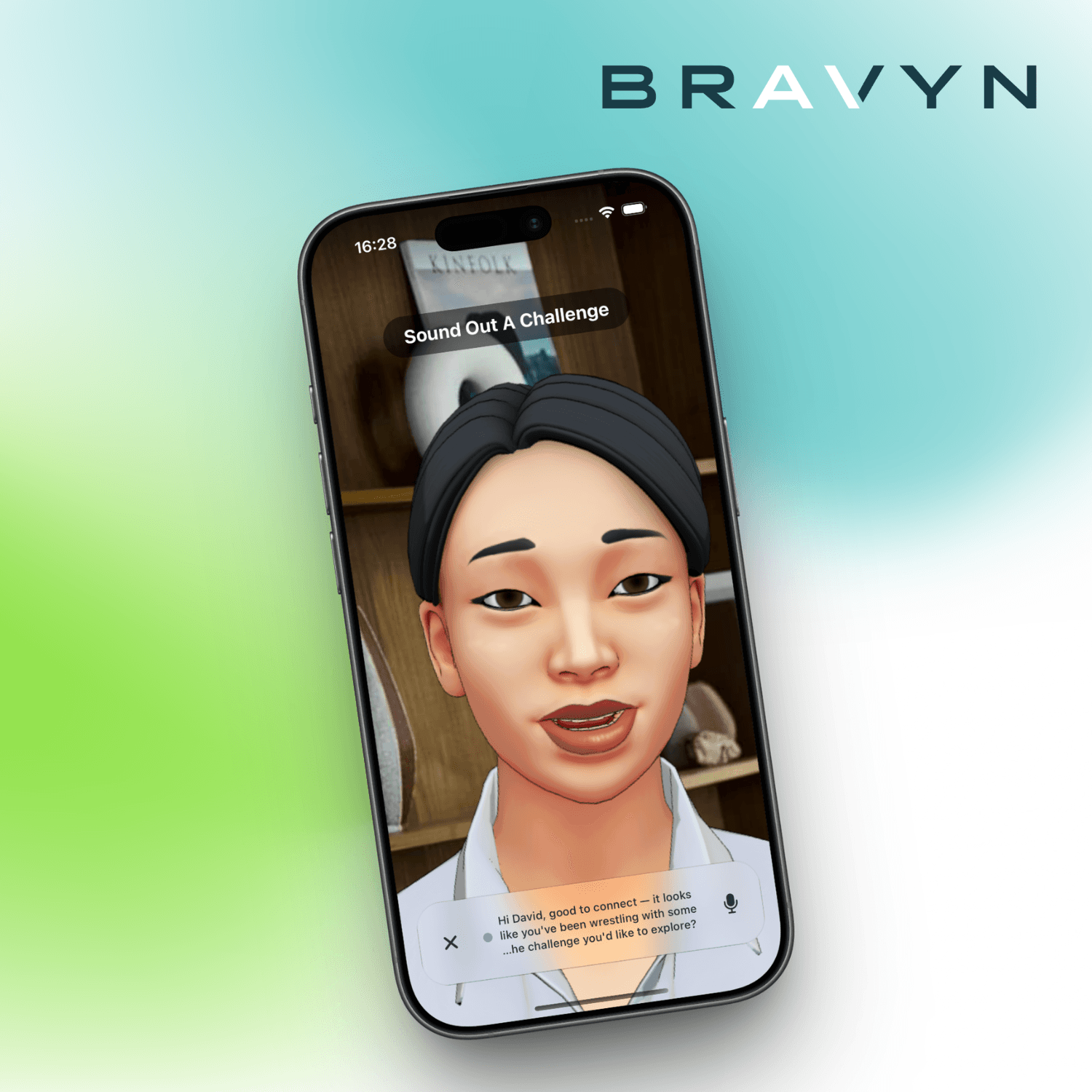
Victoria is full-screen, looking ahead, responsive in real time. You speak aloud. She speaks back, voice and face moving together. You can see her tracking what you're saying. Captions appear if you want them.
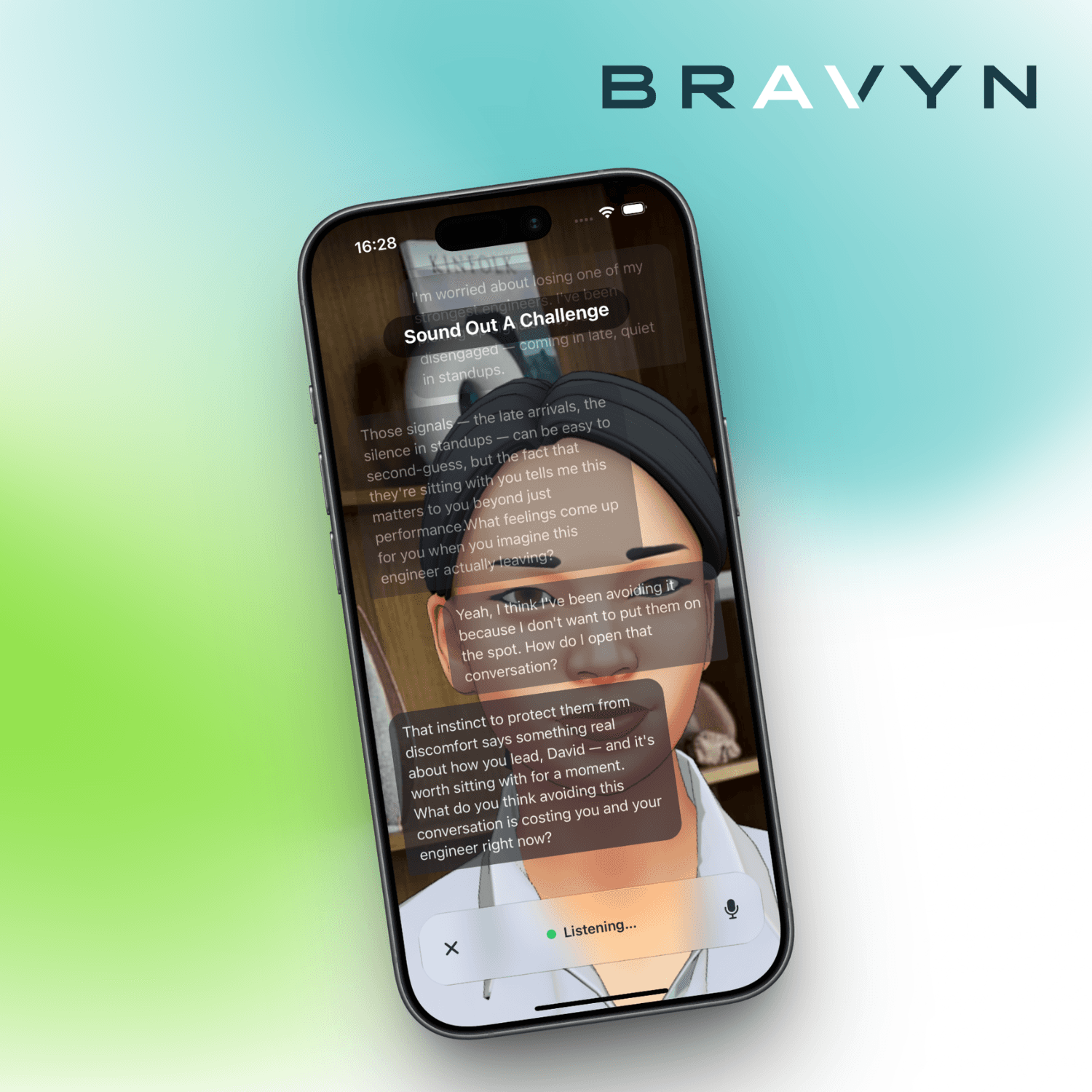
Tap the screen and the full transcript fades in, useful when you want to scroll back through what's been said. Tap again, and she's back, undistracted.
When you're done, you walk away with something specific to take into the room you're heading into. The platform does the rest in the background.
Why a face
Presence is visible. The ICF defines presence as being fully conscious and present with the client. Strip that signal out and what's left is a chatbot. The face is what makes inquiry feel like coaching rather than journaling. Inquiry without someone receiving it is self-talk.
Silence is part of the work. Ten seconds of silence in a chat reads as broken. You tap. You scroll. Ten seconds on a face reads as a question being held open. Holding space is half of coaching, and you can't hold space through a chat input.
You can't bullshit a face. Self-inquiry in front of a face is more direct than typing into a box. The witnessed feeling, even when the witness is synthesised, changes how the coachee frames the problem. People say things to Victoria they wouldn't put in a search bar. As one CGO in the avatar space put it, a text-based AI coach is practising for a written exam. The room itself is what makes the work the work.
Why mobile, full-screen
The phone goes where the moment is. Five minutes before a difficult conversation. The walk back to the car park. A desktop tool only opens in a room that already has the conversation in it. A phone goes everywhere a phone goes. That's where coaching does its most useful work: between meetings, not after the day is over.
Full-screen matters because the framing changes what the interaction is. A panel on a screen full of other panels is an app. A face that fills the screen is a conversation. We deliberately don't let the rest of the OS in. No tab bar. No notifications.
Camera eye-line is the third reason. A phone held in front of you sits roughly where another person's face would be. A laptop camera looks down at you from above. The geometry of a conversation matters more than people credit.
Why now
Three capabilities have only recently become real together, and the product is what happens when they meet.
The first is real-time, emotionally expressive avatars. The underlying tech (facial expressiveness, real-time lip-sync, responsive emotion, all at conversational latency) has only recently reached the bar where the face does not break presence. Five years ago you couldn't produce a face this responsive at this speed. Three years ago you couldn't do it on a phone.
The second is conversational AI that can ask coaching questions, not retrieve answers. The instinct of a general-purpose LLM is to be helpful. To summarise. To explain. Coaching needs the opposite. To ask. To redirect the conversation back to the coachee. The ICF calls this evoking awareness, and it's the move that distinguishes coaching from consulting. Getting an LLM to coach rather than help is its own piece of work, and we'll cover it in a follow-up on our closure research.
The third is what happens after the session. Each conversation is processed for what was discussed, what landed, and what the coachee committed to. Structured understanding, not transcripts. Session eleven doesn't begin cold; it begins where session ten left off, the way a human coach holds the client's developmental arc across an engagement.
None of those three is novel on its own. The conjunction is.
What it isn't
A few things we are explicitly not building.
Not a chatbot with a face glued on. The face is structural to how the work happens, not decoration. Remove the face and the experience doesn't work. Presence breaks. The inquiry becomes journaling. We didn't add a face to a chatbot; we built a coaching practice whose mode of working happens to require one.
Not a role-play partner. The field is increasingly crowded around this so we want to be specific. Some products simulate the other person (your difficult report, the demanding stakeholder) so you can practise being the leader against them. That's a legitimate L&D tool. It's not what we are. Victoria is the coach, working with the coachee on the coachee's inquiry. The coachee is the focus. The coachee owns the work. The avatar's job is to evoke their awareness, not to play their counterpart.
Not a substitute for a human coach. Where a coachee has access to a human coach, that relationship remains the gold standard. The avatar is there for the times a human coach can't be. Saturday morning. Eleven at night before a Monday review. The gap between two meetings.
Until 11 June 2026, you can find Victoria at CIPD Festival of Work, ExCeL London, stand H44. Come and meet her. This footnote will be replaced after the event.

ABOUT THE AUTHOR
David Nicol
Chief Technology Officer & Co-founder
With over 30 years of technical experience spanning AI, software engineering and product development, David leads Bravyn’s engineering and technical strategy behind a scalable, trustworthy coaching platform.
BOOK A DEMO